

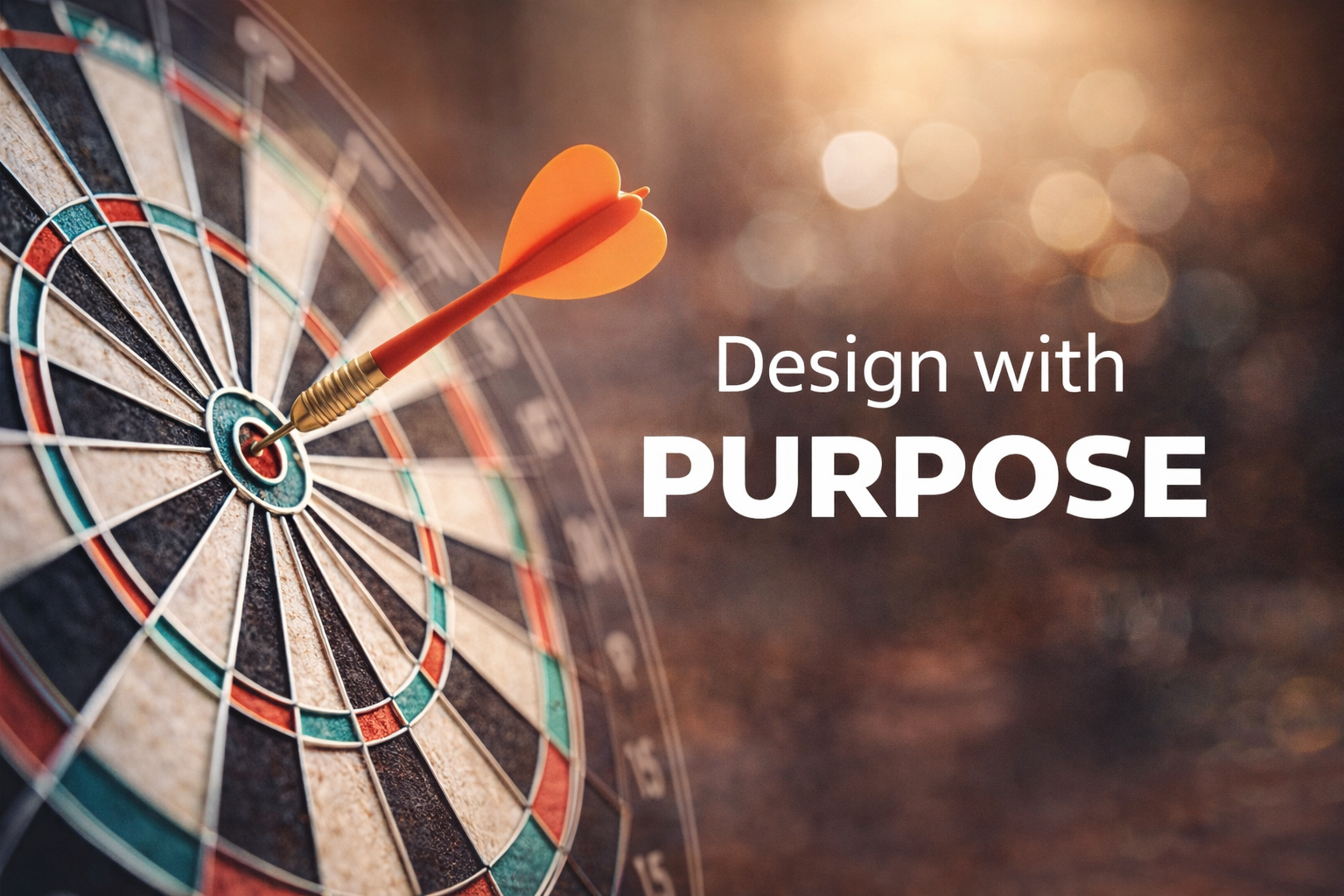
“Good design is as little design as possible.
Our Perspective?
There was a time when design had one job: be pretty. And honestly, it did a very good job. Gold foil. A tasteful serif. A logo that looked expensive even when the business plan was…just vibes. But in 2026, the bar has moved. The question isn’t “Does it look good?” anymore. It’s: Does it work? Does it solve something real? Does it shift behaviour, build trust, or move people to act?
At Design@Bay, we’re obsessed with thoughtful design—the kind that’s intentional, not decorative. We love a clean grid, typography that knows what it’s doing, and colour palettes that behave themselves. But thoughtful design alone isn’t the goal.
Because design isn’t decoration, design is direction.
As legendary designer Dieter Rams put it: “Good design is as little design as possible.” In other words, the real work happens long before the visuals appear. And if strategy doesn’t lead, design is just…a very nice guess.
The Shift: From Decorative Design to Strategic Design
The digital world is loud. Not “busy” loud—vuvuzela-in-a-small-room loud. Every brand is competing for the same three things: attention, trust and engagement. In this environment, design that exists purely for aesthetics might catch someone’s eye…only to be immediately scrolled past, screenshot, or replaced by the next shiny thing.
Pretty gets the click. Purpose earns the stay.
When design aligns with strategy, behaviour changes. People register. People donate. People complete the form. People stay long enough to understand.
Strategic design starts with the questions most people skip because they’re not “fun” (but they’re the reason the work actually lands): Who are we speaking to, really? What problem are we solving? What should happen after someone sees this? How does this support the bigger goal—growth, uptake, donations, trust, action? At Design@Bay, this is where the work begins. Then creativity does what it does best: turn strategy into something people can feel, understand, and respond to. Without a strategy, design becomes what we politely call…very nice decoration.
Why Strategy Matters More Than Ever
Three shifts are reshaping design today:
- AI is making design faster, but speed isn’t a strategy. Tools can generate visuals in seconds, but they can’t define purpose or understand context.
- Brands now live everywhere, from websites and social media to reports and campaigns, and audiences encounter brands across multiple platforms. Strategy ensures these touchpoints feel coherent rather than chaotic.
- Design now drives real outcomes; it influences engagement, usability, credibility, and growth. Design isn’t a finishing touch; it’s part of the engine.
Ultimately, design isn’t decoration. It’s communication.
The Strategic Design Lens
Before design begins, strong creative teams ask four questions:
- What behaviour should change?
- What decision should become easier?
- What message must be remembered?
- What experience will make that possible?
Design becomes powerful when it answers these questions visually.
Think First, Design Second
Design@Bay’s philosophy is simple: think first, design second. We begin with discovery and strategy, then translate those insights into visuals that are clear, human, and purposeful. Creativity follows intention, not the other way around.
Because good design captures attention, great design guides understanding.
Strategic Design Is the Real Glow-Up
As technology evolves and competition grows, the winners won’t always be the brands with the flashiest visuals. They’ll be the organisations with the clearest intention. Design will keep evolving from decoration to strategic problem-solving. At Design@Bay, we see design as structured communication, a way to translate brand truth into experiences people actually connect with. Because in 2026 and beyond, great design isn’t just about how it looks.
It’s about why it exists, and what it’s meant to do.
So the real question isn’t whether design can look good. It’s whether it can work harder. Because the best design doesn’t just look good, it makes things happen. At Design@Bay, we help organisations translate strategy into visuals that people understand, trust, and respond to. If your brand, report, campaign, or knowledge product needs design that does more than decorate—design that clarifies, connects, and drives action—let’s talk.