When Art Becomes an Archive: Who Gets to Tell the Story?
A painting can outlive its creator. But what about the stories behind it? The moments that inspired it, the places that shaped it, the decisions made somewhere between the first brushstroke and the final signature? When art becomes an archive, preserving the work is only part of the responsibility. Preserving the artist’s story, in their own words, is another. And it raises a question worth asking: who gets to tell the story, and how do we make sure we get it right?
A painting tells a story. Just not always the whole story.
Stand in front of a painting long enough, and something happens. You notice the light. The movement. A detail you missed the first time. You bring your own experiences to what you’re seeing, and somewhere between the artist’s intention and your interpretation, a new meaning emerges. That’s part of what makes art extraordinary. It doesn’t need to explain itself.
But there’s another side to that freedom. What we see in a painting isn’t necessarily what the artist saw when creating it. The landscape might hold a childhood memory. A particular colour might represent years of experimentation. A seemingly ordinary scene might carry a story that would otherwise never be told. Without the artist’s voice, those layers can disappear. And while art should always leave room for interpretation, there’s something valuable about knowing what the person holding the brush wanted to say.
When a body of work becomes a cultural record
Art doesn’t exist outside its time or place. It absorbs the world around it, sometimes deliberately, sometimes without the artist even realising it. Over decades, a collection of paintings can become more than a record of artistic development. It can reflect changing landscapes, communities, relationships and ways of seeing the world. This is particularly meaningful in a country like South Africa, where our cultural histories are rich, layered and not always equally documented.
The question, then, isn’t simply whether art deserves to be preserved. It’s what we risk losing when we preserve the image but not the story. An exhibition allows us to encounter art. A thoughtfully developed publication can extend that encounter beyond the gallery, across generations and geographical boundaries.
But turning a lifetime of creative work into a book involves more than placing beautiful images on beautiful pages.
How to tell the story when it isn’t yours
Here’s where things become interesting for those of us working in communication and design. Every editorial decision shapes how a story is experienced. Which painting comes first? Which works belong together? Where should the artist’s reflections appear? How much explanation is enough? And when should the design get out of the way?
These aren’t merely aesthetic choices. They’re decisions about meaning, context and representation.
A beautifully designed book can still miss the point if it loses the voice of the person whose work it celebrates.
That’s why the relationship between the artist, editor and designer matters. The process requires listening as much as creating, asking questions as much as making decisions, and recognising that the most compelling story may already be there, waiting to be heard.
Sometimes the most important creative decision is knowing what not to change.
It’s All About the Light: From canvas to binding
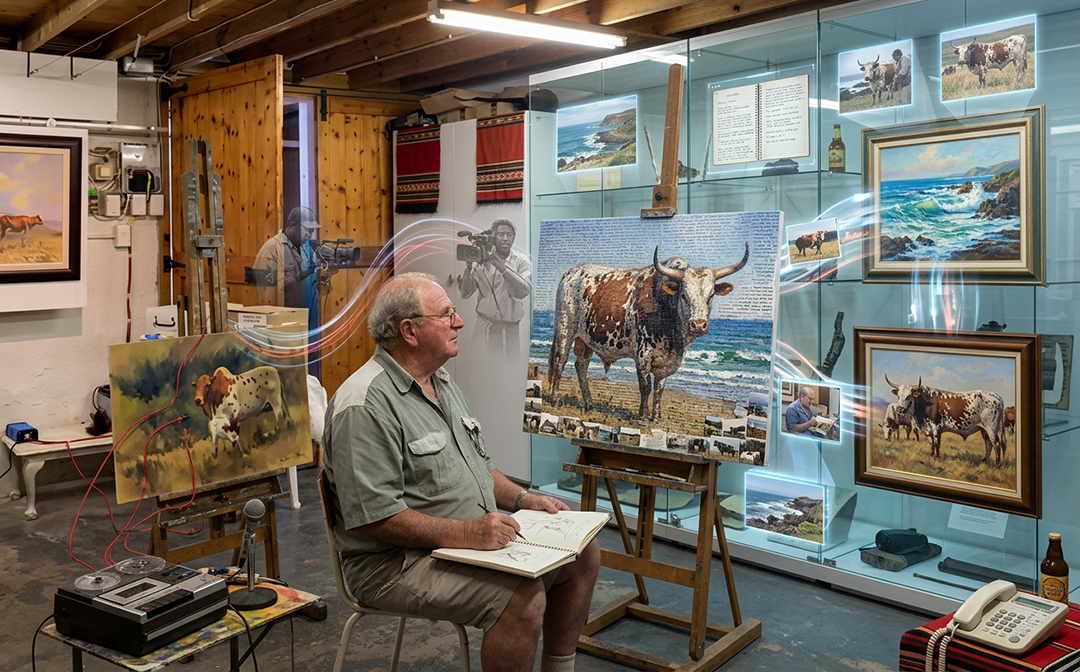
These questions have taken on particular meaning for us at Design@Bay as we begin working with Eastern Cape artist RD McKenzie on a 200-page art book, working title: It’s All About the Light. The publication will bring together his paintings and personal reflections, documenting his artistic journey through the work itself and the stories behind it.
It’s a project that brings several disciplines into conversation: art, storytelling, editing, publication design and print production. Each has a role to play, but none should overshadow the artist’s own perspective. For us, the challenge is as exciting as it is important. How do we create a publication that honours the individuality of each painting while giving the collection a coherent narrative? How do we translate the richness of the original artworks onto the printed page? And how do we ensure the artist’s reflections remain unmistakably his?
The working title offers a compelling idea in its own right. Light changes what we see. It reveals details, creates atmosphere and shifts our perspective. In many ways, storytelling does something similar. It can illuminate the experiences behind an artwork, helping us see what we might otherwise have missed. And perhaps that’s what a good art book should do. Not tell readers what to see, but give them another way of looking.
When design knows when to step aside
In our industry, we often talk about design’s power to capture attention, communicate ideas, and create memorable experiences. But not every design project calls for a bold visual statement. Sometimes the most thoughtful design is the kind that makes space for someone else’s voice. In an art book, typography, sequencing, image reproduction, white space, and the physical experience of turning a page all shape how the work is encountered. Done well, these elements don’t compete with the paintings. They create the conditions for readers to appreciate them. This is where strategy and creativity meet in a particularly interesting way. The objective isn’t to make the design the story. It’s to understand the story well enough to know how best to present it. And that takes restraint, curiosity and respect for the work.
Our perspective: Preserving more than the picture
At Design@Bay, we’ve always believed that good communication begins with understanding. Before the layout, before the typography, before the final printed page, there’s a person, an idea and a story worth listening to.
Working with RD McKenzie reminds us that the principles of thoughtful communication apply just as much to art as they do to brands, publications and campaigns.
Because preserving an artist’s work isn’t only about what future generations will see, it’s also about what they’ll understand. As we embark on this journey from canvas to binding, we’ll share glimpses of the creative process, the conversations, and the decisions involved in bringing It’s All About the Light to life. After all, an artist spends a lifetime creating the work. The least we can do is give the story the care it deserves.
Follow our journey, from Canvas to Binding, as we explore the making of an art book and the stories behind the art. Design@Bay